
When to Replace a Well Pressure Tank (Short Cycling Explained)
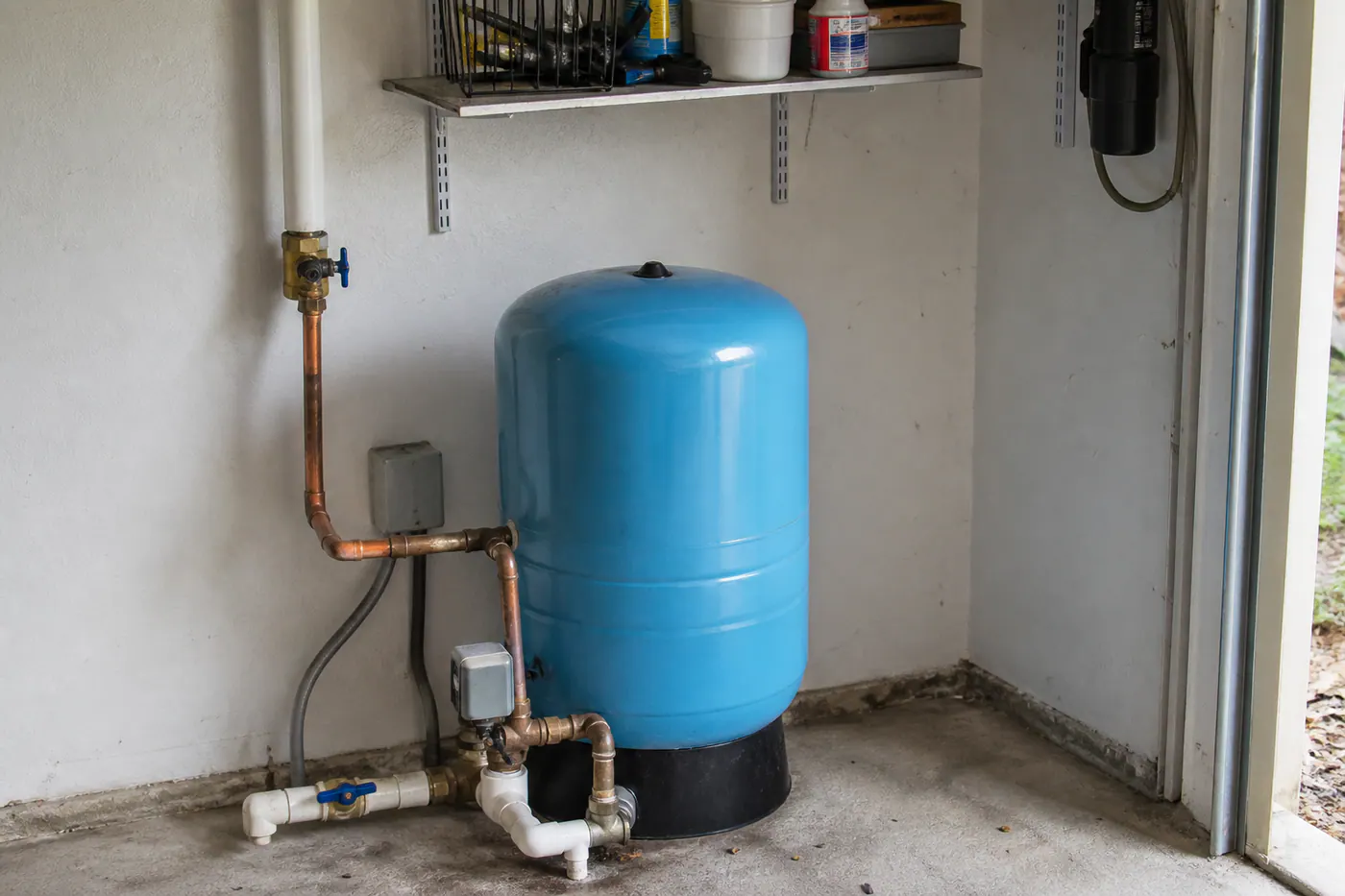
A pressure tank’s job is to store a cushion of pressurized water so the pump isn’t slamming on every time someone rinses a glass. When the bladder fails, the tank fills with water, the cushion disappears, and the pump short-cycles. That destroys pumps. Replacing the tank is cheaper than replacing both.
Quick homeowner checks
- •Tap the tank, a healthy tank sounds partly hollow, not completely dead-solid
- •Watch the pressure gauge: rapid swing from cut-in to cut-out is a clue
- •Note rusted fittings and leaking tank tees
What we set on a new tank
Pre-charge is set relative to the pressure switch (typically 2 psi below cut-in). Wrong air charge makes a brand-new tank behave like a bad one. We also confirm the switch and check valve so the new tank isn’t fighting another fault.
How short cycling kills pumps
Without an air cushion, the pump slams on for every cup of water. Motors overheat. Replacing the tank is usually cheaper than a new pump plus a new tank after the motor dies.
Sizing the replacement
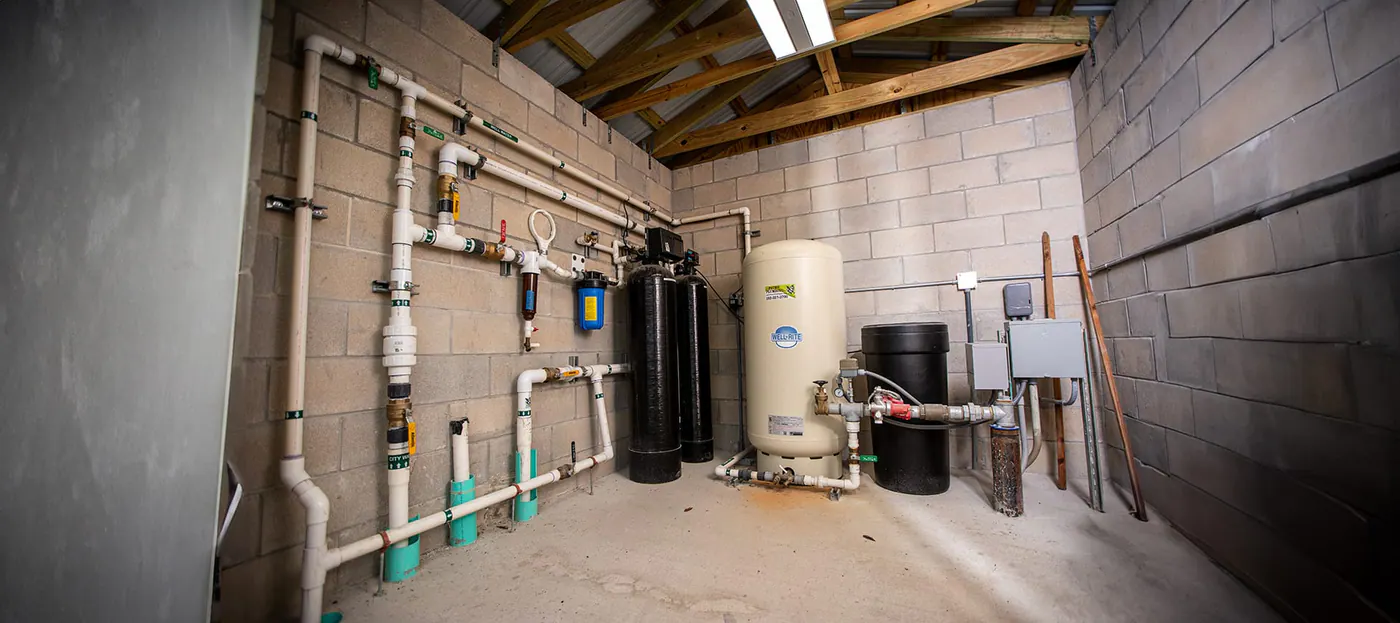
A larger drawdown means fewer cycles. We size to pump capacity and household use, not to whatever rusty tank was there in 1998.
Frequently asked questions
How long do pressure tanks last?
Often 5-12 years depending on size, water chemistry, and whether the pre-charge was maintained. A waterlogged tank can fail suddenly.
Can I just add air with a compressor?
If the bladder has failed, added air won’t last. We test the tank and replace it when the bladder is shot.
Related service: Wells & Well Pumps.
Need a plumber in Central Florida?
Prime Plumbing Inc is family-owned, state-licensed, and available 24/7 for emergencies across Lake County and nearby communities.