No Water From Your Well? A Step-by-Step Troubleshooting Guide
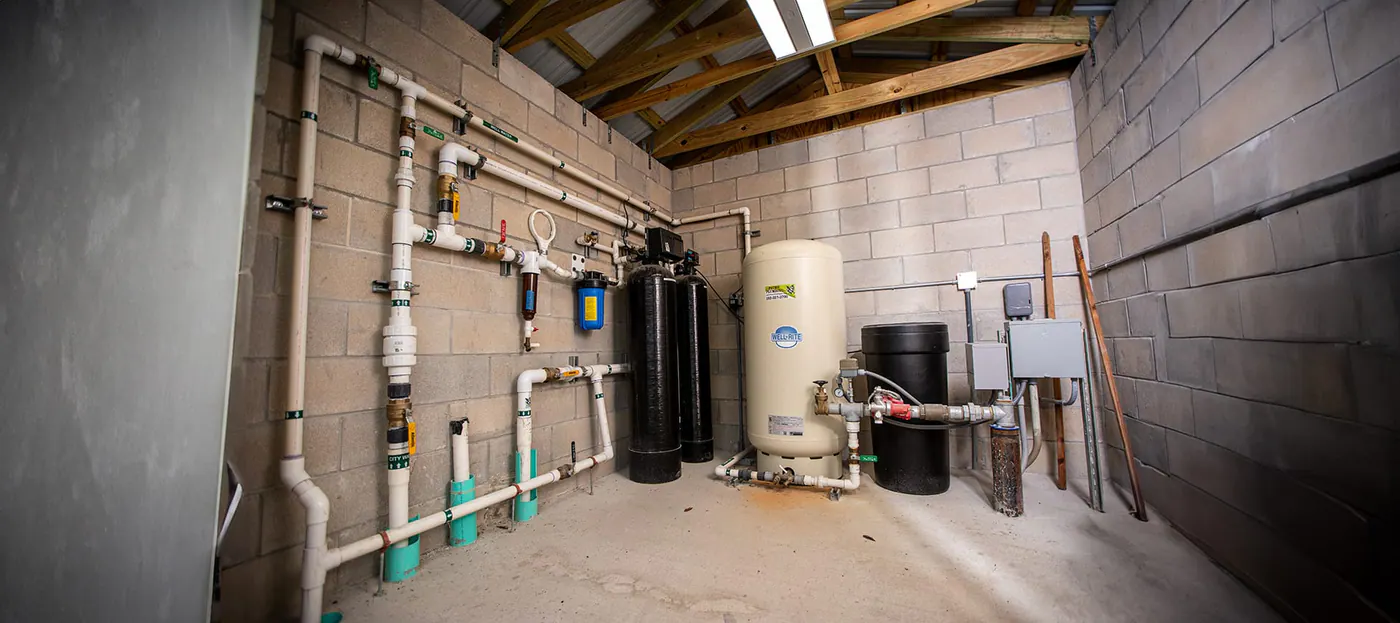
On a private well, every gallon depends on a pump, a pressure switch, a pressure tank, and the electricity that powers them. When the faucets suddenly run dry, it feels like a crisis, but the cause is often a tripped breaker or a single failed component. These steps help you narrow it down safely before you call for service. Anything involving opening electrical boxes should be left to a professional.
Step 1: Check the power
Start at your electrical panel. Well pumps are usually on a double-pole 240-volt breaker. If it is tripped, reset it once. If it trips again immediately, do not keep resetting it. That points to a short in the pump, wiring, or control components. Also check for a separate disconnect switch near the pressure tank, which can get bumped off accidentally.
Step 2: Read the pressure gauge
The gauge on or near the pressure tank tells you what the system sees. If it reads zero or very low, the pump is not delivering water. If it shows normal pressure but no water reaches the faucets, the problem may be a closed valve, a clogged sediment filter, or a frozen or broken line between the tank and the house.
Step 3: Listen to the pressure switch
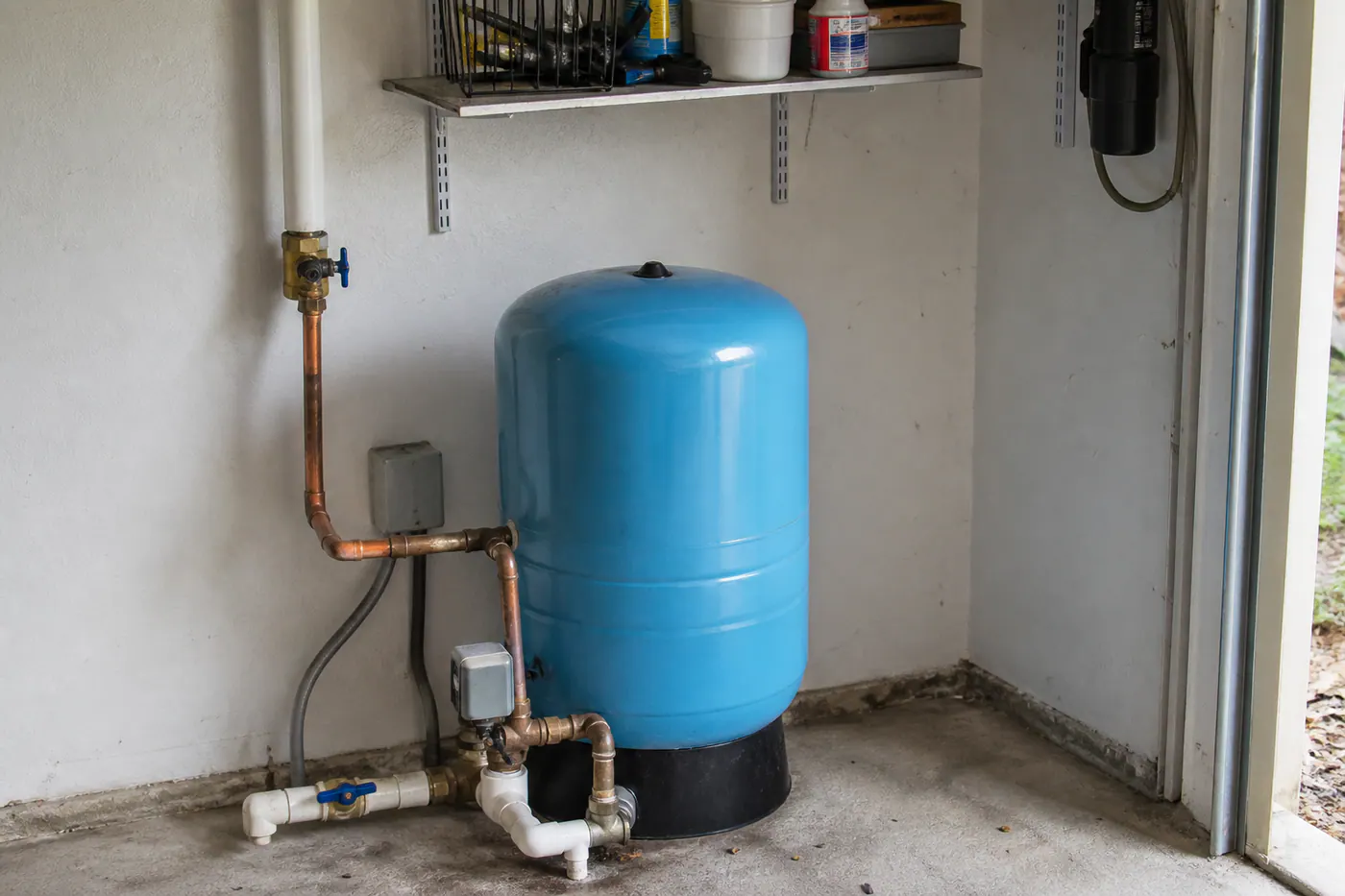
The pressure switch is a small gray box, usually mounted near the tank. When pressure drops, you should hear it click as it turns the pump on. If you hear nothing, the switch contacts may be burned or the tiny tube that connects it to the plumbing may be clogged with sediment. Do not open the cover or touch the contacts, since they carry live 240-volt power.
Step 4: Look at the pressure tank
A healthy tank holds a cushion of air that lets the pump rest between cycles. If the tank is waterlogged, the pump turns on and off rapidly every time you open a faucet. That short cycling burns out switches and pumps. Tapping the tank can help: a tank that sounds solid all the way up may have lost its air charge or have a failed bladder.
Common causes we find in Central Florida
- •Lightning damage. Florida sees more lightning than almost anywhere in the country, and surges frequently take out pumps and controls.
- •Failed control box capacitor on three-wire submersible pumps.
- •Burned pressure switch contacts from years of cycling.
- •A jet pump that has lost its prime, common with shallow wells.
- •A drop in the water table during dry spells that leaves the pump drawing air.
- •A broken pipe between the well and the house, sometimes revealed by a wet patch in the yard.
When to call for service
If the breaker keeps tripping, the switch will not click, the pump runs constantly without building pressure, or you see sand or air spurting from faucets, it is time for a well technician. Pulling a submersible pump requires specialized equipment, and diagnosing wiring and control problems safely requires the right meters and experience.
Frequently asked questions
Why did my well stop working after a thunderstorm?
Lightning and power surges commonly damage well pumps, pressure switches, and control boxes. Central Florida's frequent storms make surge damage one of the most common causes of sudden well failure.
Can I reset my well pump?
Some pressure switches have a low-pressure cutoff lever that can be held to restart the pump. If the pump shuts off again quickly, there is an underlying problem and you should stop resetting it.
How long should a well pump last?
Submersible pumps often last 8 to 15 years, depending on water quality, sizing, and how often the pump cycles on and off.
Related service: Wells & Well Pumps.
Need a plumber in Central Florida?
Prime Plumbing Inc is family-owned, state-licensed, and available 24/7 for emergencies across Lake County and nearby communities.