What Not to Put in a Garbage Disposal (and Why It Matters)
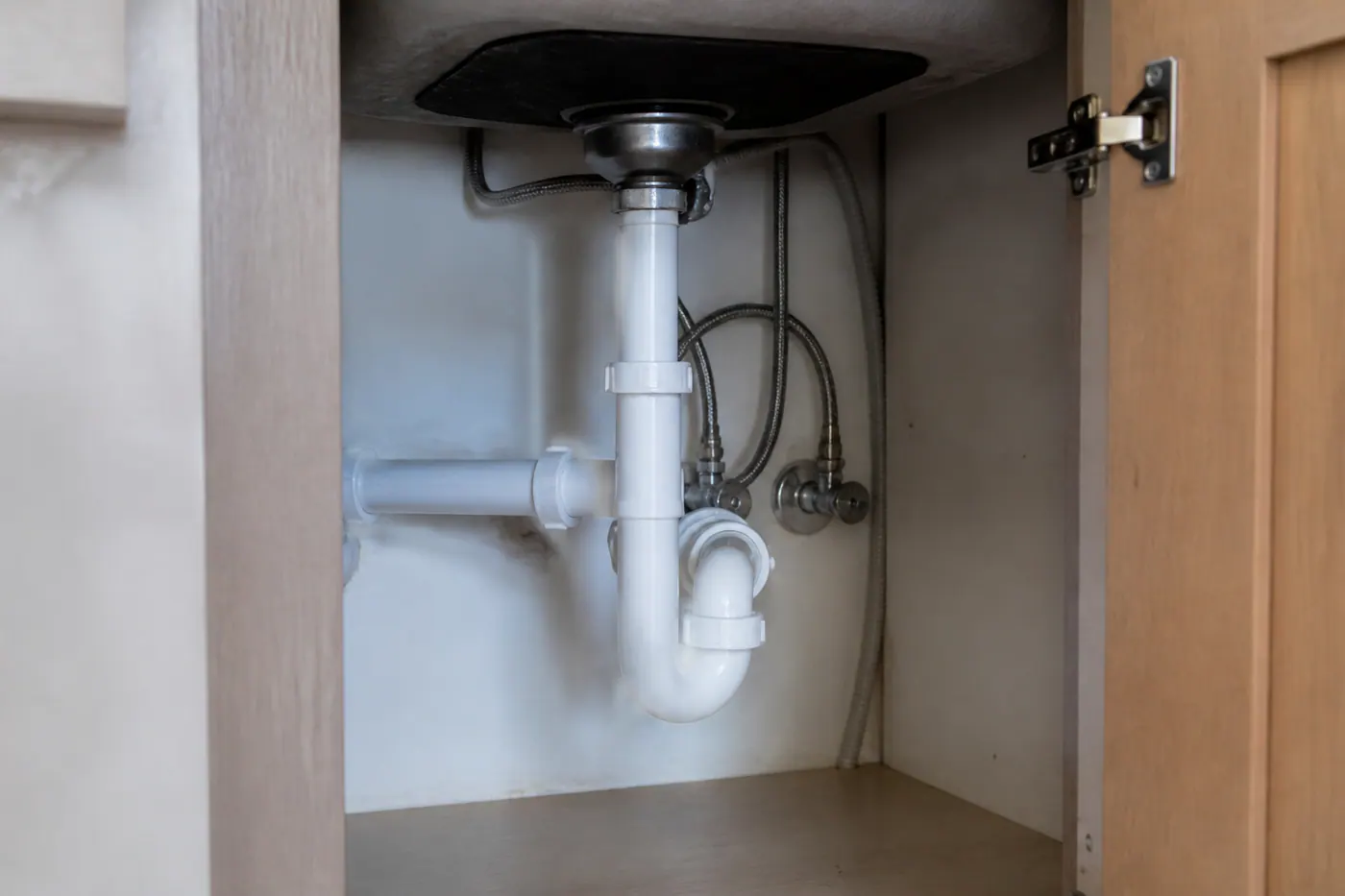
Most kitchen drain calls we take start the same way: the disposal hums, the sink fills, and somebody remembers the pot of rice they rinsed last night. A disposal grinds food into small particles, but those particles still have to travel through a trap, a horizontal drain line, and eventually the main sewer or septic tank. Anything that swells, sticks, or settles along that route becomes tomorrow's clog. Knowing what to keep out of it is the cheapest drain maintenance there is.
The worst offenders
- •Grease, oil, and fat. Liquid when hot, solid when it cools, and it coats every inch of pipe on the way down. Wipe pans with a paper towel first.
- •Rice, pasta, oats, and bread. Starches keep absorbing water after they are ground, swelling into a paste that packs the trap.
- •Potato peels. They grind into a starchy glue and the long strips can wrap the impeller.
- •Coffee grounds. They do not jam anything, which is why people assume they are fine. They settle like sediment and build up slowly.
- •Fibrous vegetables. Celery, corn husks, onion skins, artichokes, and asparagus ends wind around the grinder like string.
- •Bones, fruit pits, and shells. Too hard to grind, and they can crack the grind ring or stall the motor.
- •Anything that is not food. Twist ties, produce stickers, and paper towels are surprisingly common finds.
What is actually fine
Small amounts of soft food scraps, plate scrapings, cooked vegetables, and small citrus pieces are what a disposal was designed for. Feed them in gradually with a steady stream of cold water, let the unit run until the grinding sound changes to a smooth whir, then keep the water running for another 15 seconds to push everything past the trap. Overloading the chamber is the most common way people jam a perfectly healthy disposal.
If your home is on a septic system
Plenty of homes around Umatilla, Eustis, and the rural parts of Lake and Marion County rely on septic tanks, and a disposal changes the math. Ground food adds solids that bacteria break down slowly, so the sludge layer grows faster and the tank needs pumping sooner. You do not have to remove the disposal, but use it lightly, compost what you can, and tell your septic provider so they can set a realistic pumping interval.
When it hums but will not spin
A humming disposal is usually jammed, not dead. Turn it off at the switch and unplug it or flip the breaker. Most units have a hex socket centered on the underside; a quarter-inch Allen wrench lets you rock the impeller back and forth to free it. Then press the red reset button on the bottom and try again. Never reach into the chamber with your hand, even with the power off. Use tongs or pliers to pull out the object.
Signs the problem is deeper than the disposal
If the dishwasher backs up into the sink, both basins drain slowly, or you hear gurgling from nearby fixtures, the blockage is probably in the branch line beyond the trap. That calls for a drain snake or hydro jetting, not another reset. Water leaking from the bottom of the disposal body usually means the internal seals have failed and it is time for a replacement unit.
Frequently asked questions
Can I put coffee grounds down the garbage disposal?
It is best not to. Grounds do not jam the blades, but they settle in the trap and drain line like wet sand and build a dense clog over time. Compost them or throw them out.
Do eggshells sharpen garbage disposal blades?
No. Disposals use blunt impellers, not blades, so nothing gets sharpened. The shell membrane can wrap around the impeller and the gritty shell bits add sediment to the drain line.
Should I run hot or cold water with a garbage disposal?
Cold. Cold water keeps any fats solid so they get chopped and carried away instead of melting and coating the pipe farther downstream.
Related service: Drain Cleaning.
Need a plumber in Central Florida?
Prime Plumbing Inc is family-owned, state-licensed, and available 24/7 for emergencies across Lake County and nearby communities.